Single-sided deafness, also known as unilateral hearing loss, can significantly impact daily life, making it challenging to follow conversations, locate sounds, or navigate noisy environments.
CROS and BiCROS hearing aids offer targeted relief for individuals facing this condition. These specialized hearing solutions are designed to reroute sounds from the impaired ear to the better-hearing one, helping users regain a sense of auditory balance.
In this comprehensive guide, we’ll explore what CROS and BiCROS hearing aids are, how they function, who can benefit from them, and key considerations for adaptation. Whether you’re experiencing sudden hearing loss or exploring options for long-term management.
What Are CROS Hearing Aids?
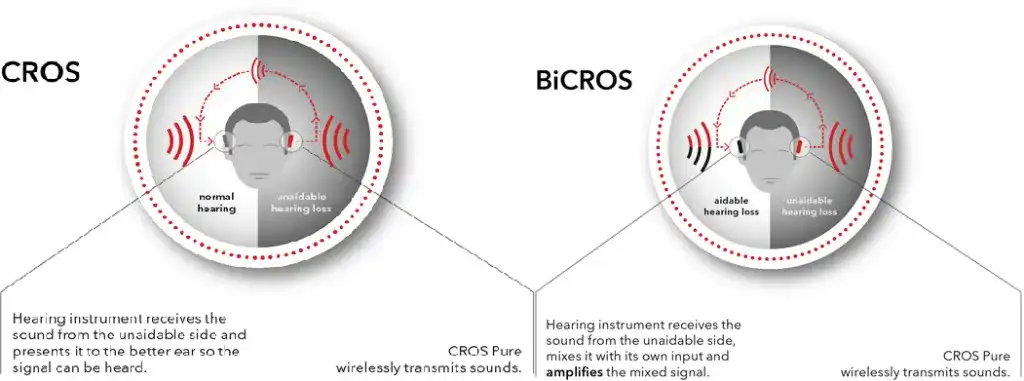
CROS hearing aids represent a breakthrough in assistive technology tailored specifically for those with hearing loss in one ear, often referred to as unilateral hearing impairment. The term “CROS” is an acronym for Contralateral Routing of Signals, which aptly describes the core mechanism of these devices. Unlike traditional hearing aids that amplify sound directly in the affected ear, CROS systems focus on capturing audio from the non-functional side and transmitting it wirelessly to the functional ear.
This approach addresses a common frustration for people with single-sided deafness: the inability to hear sounds originating from the impaired side. By bridging the gap between the two ears, CROS hearing aids enhance overall sound awareness, making everyday interactions—like chatting in a group or listening to music—more enjoyable and less strained.
How Do CROS Hearing Aids Work?
The functionality of CROS hearing aids is both elegant and straightforward. Here’s a step-by-step breakdown of their operation:
- Sound Detection on the Impaired Ear: A small transmitter device is worn on the “bad” or non-hearing ear. This component includes a sensitive microphone that picks up ambient sounds, voices, or noises from that side.
- Wireless Transmission: The captured audio signals are sent wirelessly—typically via Bluetooth or a proprietary radio frequency—to a receiver worn on the “good” or better-hearing ear.
- Delivery to the Functional Ear: The receiver, which resembles a standard hearing aid, processes and plays the transmitted sounds directly into the functional ear. This creates the illusion of binaural hearing, where both ears contribute to sound perception.
This system effectively eliminates the “head shadow” effect, a physiological barrier that exacerbates hearing challenges in unilateral cases. Without intervention, high-frequency sounds (like consonants in speech) are muffled or lost as they travel around the head, leading to misunderstandings in communication.
Explaining the Head Shadow Effect
The head shadow effect is a key auditory phenomenon that underscores why CROS hearing aids are so valuable. Imagine sound waves approaching from the side of your impaired ear—they must navigate around your head to reach the opposite ear. During this journey, the head acts as a physical barrier, absorbing and distorting higher-pitched frequencies more than lower ones.
- Impact on Speech Clarity: Vowels (low-frequency sounds) might still be audible, but consonants (high-frequency elements) like “s,” “t,” or “k” are often weakened. This can make it difficult to differentiate words such as “ship” from “chip” or “fan” from “van.”
- Noisy Settings: In environments like crowded restaurants, busy streets, or offices, background noise amplifies the problem. The head shadow not only blocks direct sound but also allows competing noises to dominate, reducing speech intelligibility by up to 10-15 decibels in some cases.
- Consequences: Without aids, individuals may experience social isolation, reduced workplace productivity, or safety risks, such as not hearing approaching vehicles from one side.
Audiologists emphasize that while the head shadow effect is a natural occurrence, technologies like CROS can mitigate it, restoring a more natural listening experience. Studies from organizations like the American Speech-Language-Hearing Association highlight how such interventions improve quality of life for affected individuals.
What Are BiCROS Hearing Aids?
Building on the foundation of CROS technology, BiCROS hearing aids extend support to those with hearing loss in both ears, but with one side significantly worse than the other. The “Bi” in BiCROS stands for bilateral, indicating that these devices address impairments on both sides simultaneously.
Similar to CROS systems, BiCROS involves a transmitter on the poorer ear to capture and route sounds. However, the receiver on the better ear is enhanced with amplification capabilities. This means it not only relays sounds from the impaired side but also boosts overall volume and clarity for the functional ear’s existing hearing loss.
For instance, if your better ear has mild to moderate hearing impairment, the BiCROS receiver can be customized with prescriptive amplification settings, ensuring balanced audio input. This dual-purpose design makes BiCROS an ideal choice for asymmetric hearing loss, where traditional bilateral aids might fall short.
| Feature | CROS Hearing Aids | BiCROS Hearing Aids |
|---|---|---|
| Target Users | Unilateral hearing loss (one ear unaffected) | Bilateral hearing loss with one ear worse |
| Amplification | None on the better ear | Amplification on the better ear |
| Sound Routing | From impaired to functional ear | Same, plus enhancement |
| Common Applications | Single-sided deafness from injury or infection | Asymmetric loss with additional needs |
Who Is a Good Candidate for CROS or BiCROS Hearing Aids?
Determining candidacy for CROS or BiCROS involves a professional evaluation:
- Severe or Profound Loss in One Ear: If one ear has little to no usable hearing (often defined as thresholds above 90 dB), while the other is normal or mildly impaired.
- Asymmetric Hearing Profiles: For BiCROS, moderate loss in the better ear qualifies, provided the poorer ear benefits from signal routing.
Annually, approximately 60,000 Americans develop single-sided deafness due to various causes. Common triggers encompass:
- Viral infections that damage the inner ear structures.
- Traumatic injuries, such as head impacts from accidents.
- Vascular issues, like reduced blood flow to auditory nerves.
- Acoustic neuromas—benign tumors on the vestibulocochlear nerve.
- Ménière’s disease, characterized by inner ear fluid buildup, leading to vertigo, tinnitus, and hearing fluctuations.
If you notice sudden or progressive hearing changes, consult an ear, nose, and throat (ENT) specialist immediately. They may recommend diagnostic tests, such as audiograms, MRI scans, or blood work, to identify underlying issues like inflammation or infections. For acute onset, treatments like oral steroids can sometimes restore function if administered promptly.
Once medical causes are ruled out or treated, an audiologist can fit you for CROS or BiCROS devices. These come in battery-powered or rechargeable models, with styles ranging from behind-the-ear to completely-in-canal for discreet wear.
Alternative Options: Bone-Anchored Systems and Cochlear Implants
While CROS and BiCROS are non-invasive and effective for many, certain conditions warrant more advanced interventions:
- Bone-Anchored Hearing Aids (BAHA): These surgically implanted devices vibrate the skull to transmit sound directly to the inner ear, bypassing the outer and middle ear. Ideal for those with conductive hearing loss or chronic infections that prevent traditional aid use.
- Cochlear Implants: For profound deafness unresponsive to aids, these electronic devices stimulate the auditory nerve via electrodes inserted into the cochlea. They provide a sense of sound for users who gain minimal benefit from amplification alone.

Discussing these with your healthcare team ensures a tailored approach, especially if allergies to ear molds or recurrent ear issues are present.
Potential Drawbacks of CROS and BiCROS Hearing Aids
No hearing solution is perfect, and CROS/BiCROS systems have limitations worth noting:
- Adaptation Period: Users often need weeks or months to adjust to the altered sound processing, which can feel unnatural at first.
- Sound Localization Challenges: These aids don’t fully restore the brain’s ability to pinpoint sound origins, potentially causing confusion in dynamic settings.
- Noise Amplification: In loud environments, background sounds may be routed and amplified, overwhelming the user without proper noise-reduction features.
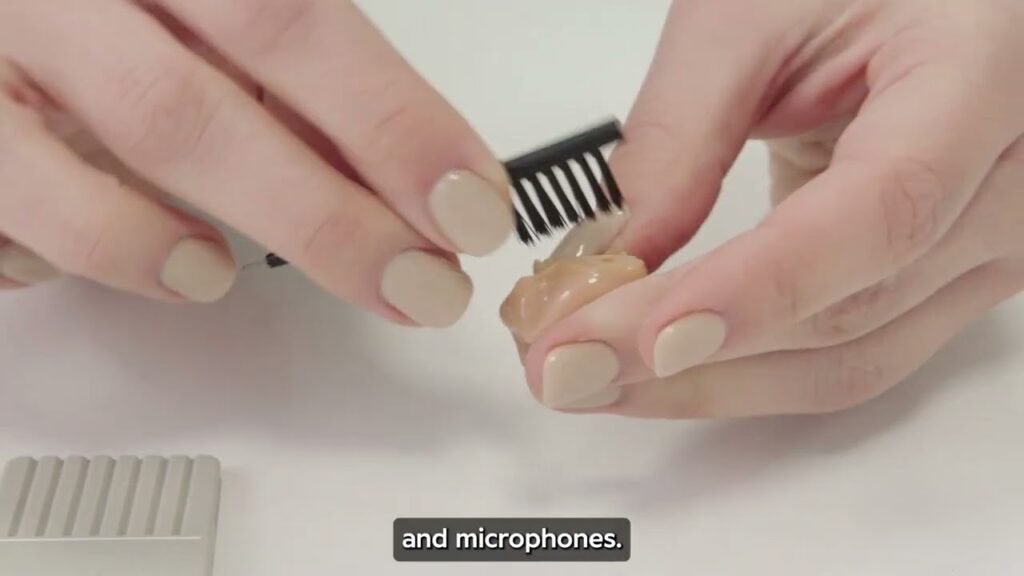
- Battery and Maintenance: Depending on the model, frequent battery changes or charging might be required, and devices need regular cleaning to prevent malfunctions.
Despite these hurdles, many users report significant improvements in speech understanding and overall satisfaction after consistent use.
Tips for Successful Adjustment to CROS or BiCROS Aids
To maximize benefits and ease the transition, follow these expert-recommended strategies:
- Commit to Full-Time Wear: Audiology leaders like Catherine Palmer, past president of the American Academy of Audiology, advise wearing the devices during all waking hours. This helps your brain adapt to the new auditory input.
- Start in Quiet Environments: Begin acclimation in calm settings before venturing into noisier ones, gradually building tolerance.
- Seek Professional Fine-Tuning: Regular follow-ups with your audiologist allow for adjustments in programming, volume, or noise management.
- Incorporate Auditory Training: Apps and exercises designed for hearing rehabilitation can enhance localization skills and speech discrimination.
- Join Support Communities: Connecting with others via online forums or local groups provides practical tips and emotional support.
Conclusion
CROS and BiCROS hearing aids offer transformative support for single-sided deafness, combating the head shadow effect and improving communication. By consulting professionals and exploring options, you can reclaim confidence in your hearing abilities. If you’re dealing with hearing loss, schedule an evaluation today to discover if these innovative devices are right for you.