Hearing loss affects millions of people worldwide, and choosing the right hearing aid can transform your hearing. The two most common options are monaural hearing aids (for one ear) and binaural hearing aids (for both ears).
But which should you choose? The answer depends on your type of hearing loss and your lifestyle. In this guide, you’ll learn the differences between monaural and binaural hearing aids, their respective advantages, and how to choose the hearing aid that best suits your needs.
What Is a Monaural Hearing Aid?
A monaural hearing aid is a single device worn in one ear. It is primarily recommended for people with hearing loss in just one ear, a condition often referred to as monaural hearing loss.
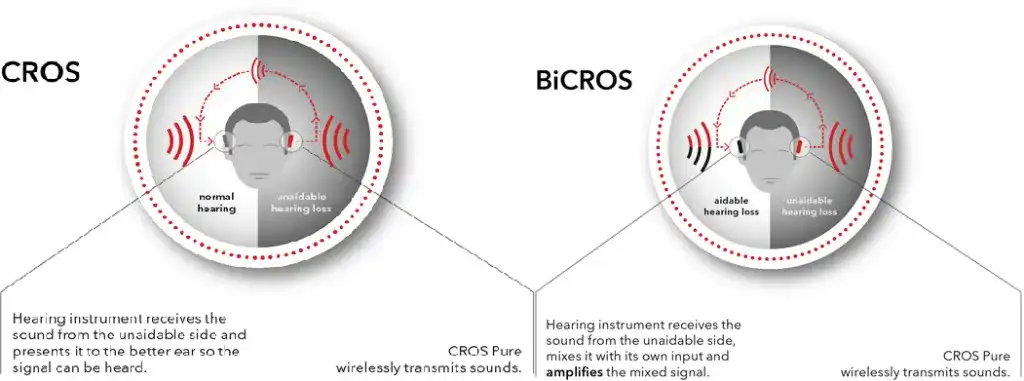
In the past, even people with bilateral hearing loss used two separate, monaural hearing aids. These operated independently and out of sync, resulting in unbalanced and unnatural sound amplification. Hearing technology has advanced significantly. While monaural hearing aids still exist and are suitable for specific situations, modern solutions focus on providing a more natural and harmonious listening experience.
What Is Binaural Hearing?
Naturally experience binaural hearing, which means hearing with both ears. This is why binaural hearing aids—a matched pair worn in both ears—are often recommended when hearing loss affects both sides.
Binaural devices are designed to work together, amplifying sounds in a balanced way across both ears. This creates a more realistic and natural listening experience, closer to how your ears and brain are designed to process sound.
Key Advantages of Binaural Hearing Aids:
- Better ability to determine the direction of sound (localization)
- Improved speech clarity, especially in noisy environments
- More natural sound quality
- Reduced listening fatigue

Why Wearing Two Hearing Aids Is Often Better
Even if your hearing loss seems more pronounced in one ear, healthcare professionals often recommend wearing two devices.
- Brain Processing Balance
Sound entering the left ear is processed by the right hemisphere of your brain, and sound entering the right ear is processed by the left hemisphere. Both sides of the brain must work together for optimal hearing. Binaural aids stimulate both hemispheres, leading to more accurate and balanced hearing. - Directionality and Safety
With two aids, you’re better able to detect where sounds are coming from. This is not just convenient but also critical for safety—for example, hearing approaching vehicles or locating a person calling your name in a crowd. - Reduced Strain and Discomfort
Relying on one ear for all amplified sound can cause fatigue, discomfort, and uneven stimulation. Two devices share the load, making listening more comfortable over long periods. - Better Sound Amplification
Binaural aids pick up and balance sound from multiple directions, providing a fuller listening experience. - Help With Tinnitus
Wearing aids in both ears may also reduce the perception of tinnitus (ringing in the ears), since balanced sound amplification can mask unwanted noise.
Monaural vs. Binaural Hearing Aids
| Feature | Monaural Hearing Aid | Binaural Hearing Aids |
|---|---|---|
| Usage | One ear only | Both ears |
| Best For | Single-sided hearing loss | Hearing loss in both ears |
| Sound Direction | Limited | Accurate localization |
| Natural Sound Quality | Less natural | Closest to natural hearing |
| Listening Comfort | Can cause strain | Balanced, reduces fatigue |
| Tinnitus Relief | Limited | More effective |
| Cost | Lower upfront | Higher, but better long-term value |
Should You Wear One or Two Hearing Aids?
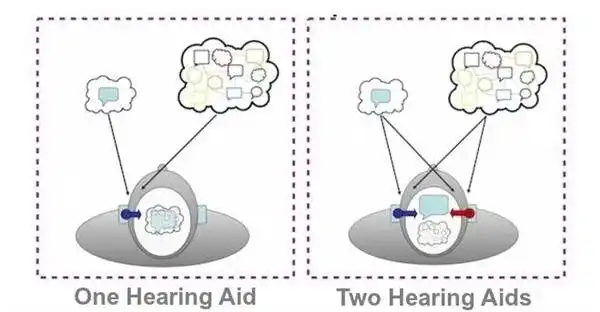
If you only have hearing loss in one ear, a monaural device may be sufficient. However, if you have bilateral hearing loss (in both ears), the most effective solution is almost always binaural aids.
Even if you feel like one ear “hears well enough,” using only one device can cause imbalance, fatigue, and missed sounds. Two aids provide a more natural experience, stimulate both ears equally, and reduce long-term hearing strain.
Conclusion
Deciding between monaural and binaural hearing aids is more than a matter of cost, it’s about your long-term comfort, safety, and quality of life.
- If your hearing loss affects both ears, binaural aids are strongly recommended for a natural, balanced experience.
- If your loss is only in one ear, a monaural device may suffice, but you should still consult an audiologist for the best outcome.
By choosing the right solution, you’ll enjoy clearer conversations, better awareness of your surroundings, and improved confidence in daily life.
👉 Next Step: Schedule a professional hearing test to determine your level of hearing loss and discover which type of hearing aid is right for you.