Before the age of digital processors, Bluetooth, and discreet in-canal devices, the challenge of hearing loss was met with ingenuity born from the simple principles of physics.
If you’ve ever seen a historical film or visited a museum of medical history, you may have encountered a curious, horn-shaped object: the ear trumpet. But what exactly are these devices, and how did they function without any electricity or complex parts?
In this comprehensive guide, You’ll learn about its origins, the science behind its design, its effectiveness, and its crucial role in the evolution of hearing aid technology.
What Are Ear Trumpets and When Were They Invented?
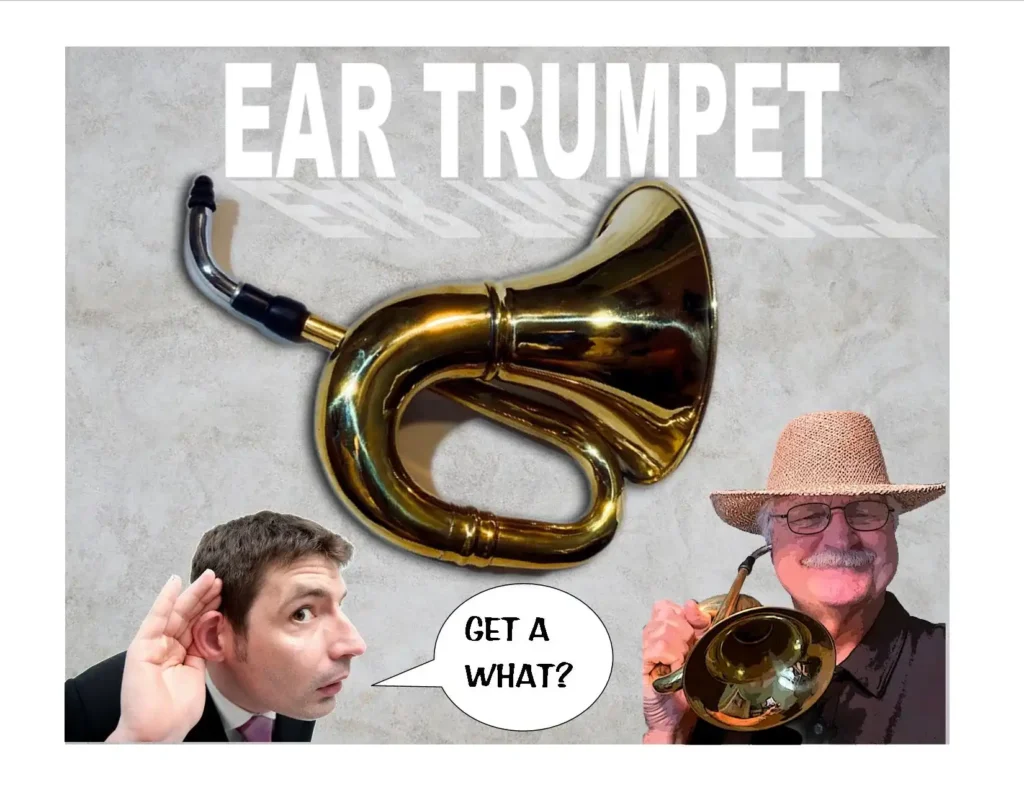
An ear trumpet is, in its most basic form, an acoustic horn. It’s a non-electric, passive amplification device designed to collect sound waves from the environment and funnel them directly into a user’s ear. Think of it as a personal, portable sound-gatherer. Their design is iconic: a wide, open bell at one end to capture sound, which tapers down to a narrow tube with an earpiece at the other.
While the simple act of cupping your hand behind your ear is a rudimentary form of the same principle, the history of dedicated hearing devices dates back centuries.
The 17th Century
The concept of the ear trumpet began to formalize in the 17th century. While historical records mention various “hearing tubes,” the French Jesuit priest and mathematician Jean Leurechon is often credited with one of the earliest descriptions of a device resembling an ear trumpet in his work Récréation Mathématique (1634). The idea was simple but revolutionary: if sound could be channeled, it could be amplified.
Early versions were often crafted from natural materials like animal horns, seashells, or wood.
The 18th and 19th Centuries
The 18th and 19th centuries marked the peak of the ear trumpet’s popularity and development. As the Industrial Revolution brought advancements in manufacturing, ear trumpets became more sophisticated and commercially available.
Manufacturers like Frederick C. Rein, established in the late 18th century, became famous for their high-quality hearing instruments. They moved beyond simple conical shapes to create a stunning variety of designs, catering not only to function but also to fashion and discretion.
- Conical and Horn-Shaped: The classic and most recognizable design.
- Collapsible Trumpets: Telescoping models were designed for portability, allowing users to easily carry them in a pocket or purse.
- Acoustic Headbands: Some designs featured two sound collectors connected by a band that went over the head, directing sound to both ears.
- Disguised Devices: To combat the social stigma associated with hearing loss, artisans cleverly integrated ear trumpets into everyday objects. You could find them hidden in fans, walking canes, ornate vases, and even acoustic chairs, which had hollow arms that collected and channeled sound to the user’s ear.

One of the most famous users of the ear trumpet was the composer Ludwig van Beethoven, who began to lose his hearing in the late 1790s. He used several ear trumpets created by the inventor Johann Nepomuk Maelzel to continue composing and communicating as his deafness progressed.
How Does An Ear Trumpet Work?

An ear trumpet enhances this natural process without any power source.
1. Sound Collection
The wide, flared bell at the end of the ear trumpet acts like a large net. Its broad surface area captures far more sound waves from the surrounding environment than your unaided outer ear (the pinna) ever could. Imagine trying to catch rain in a thimble versus a wide bucket; the bucket will collect significantly more water. The ear trumpet’s bell is the “bucket” for sound waves.
2. Funneling and Compression
Once the sound waves are collected by the bell, the conical shape of the trumpet goes to work. It funnels all of that captured acoustic energy down a progressively narrowing tube. As the space gets smaller, the sound waves are compressed. This compression increases the sound pressure level (SPL), which is the scientific measure of a sound’s intensity. In essence, the sound becomes more concentrated and powerful.
3. Directing to the Ear Canal
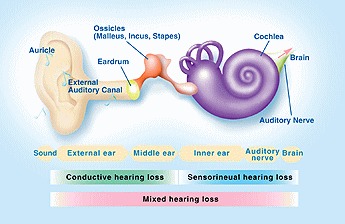
Finally, the narrow end of the trumpet is placed in or against the ear canal. This delivers the concentrated, higher-pressure sound waves directly to the eardrum. By bypassing the outer ear and focusing the acoustic energy right where it needs to go, the ear trumpet provides a significant boost in volume to the user. The result is a sound that is perceived as being much louder than it would be without the device.
Did Ear Trumpets Actually Work?
Yes, they absolutely did—within certain limits. For individuals with mild to moderate conductive hearing loss, an ear trumpet could be a life-changing tool. It made conversations clearer and allowed for greater participation in social life.
However, its effectiveness was highly dependent on several factors.
The Level of Amplification
A well-designed ear trumpet could provide a gain of approximately 10 to 20 decibels (dB). To put that in perspective, a quiet whisper is about 30 dB, and a normal conversation is around 60 dB. An extra 15 dB could be the difference between struggling to hear a conversation and understanding it comfortably. While this pales in comparison to modern digital hearing aids that can offer over 60 dB of gain, it was a remarkable improvement for its time.
Limitations and Drawbacks
Despite their utility, ear trumpets were far from a perfect solution.
- Non-Discriminatory Amplification: An ear trumpet amplifies everything. It couldn’t distinguish between the voice you wanted to hear and the clatter of a horse-drawn carriage outside. In noisy environments, this lack of sound filtering could make it even harder to understand speech.
- Directionality: To be effective, the user had to point the bell of the trumpet directly at the sound source. This required active participation in a conversation and could be physically tiring to hold the device for long periods.
- Conspicuousness: Ear trumpets were highly visible. In an era when physical disabilities were often misunderstood or concealed, using an ear trumpet could attract unwanted attention and social stigma. This is what drove the market for disguised devices like acoustic fans and canes.
- Limited for Severe Hearing Loss: The passive amplification was often insufficient for individuals with severe or profound hearing loss, particularly sensorineural hearing loss (damage to the inner ear or auditory nerve). Ear trumpets were most effective for conductive hearing loss, where the problem lies in the outer or middle ear’s ability to transmit sound.
Was the Ear Trumpet Safe?
Compared to many historical medical treatments, the ear trumpet was overwhelmingly safe. It was a non-invasive tool that relied on natural acoustics. However, there were a few minor considerations to keep in mind.
- Hygiene: The earpiece, if not cleaned regularly, could accumulate earwax and bacteria. Inserting a dirty earpiece into the ear canal could potentially lead to irritation or outer ear infections (otitis externa).
- Physical Discomfort: Larger, heavier models made from metal could be cumbersome and uncomfortable to hold for extended periods. A poorly fitted earpiece could also cause soreness in the ear canal.
- Acoustic Shock Risk:While the amplification was modest, a very loud, sudden noise (like a gunshot or a loud bang) occurring right next to the bell of the trumpet would be amplified and could be startling or painful to the user.However, the risk of permanent acoustic trauma from the device itself was extremely low, as it couldn’t generate the dangerously high decibel levels that a malfunctioning modern electronic aid could.
Technological Advancements in Hearing Aids
The ear trumpet reigned as the primary solution for hearing loss for over two centuries, but the dawn of the electrical age marked the beginning of its decline. The journey from the acoustic horn to the smart devices of today is a testament to incredible technological progress.
The Carbon Era (Early 1900s)
The invention of the telephone paved the way for the first electronic hearing aids. Using a carbon microphone, an amplifier, and a battery, these devices could provide much greater amplification than ear trumpets. The first commercially produced models appeared around the turn of the 20th century. They were bulky—often requiring a large battery pack to be carried or placed on a table—but they represented a monumental leap forward.
Vacuum Tubes and Miniaturization (1920s-1940s)
The development of vacuum tubes allowed for more powerful and slightly smaller hearing aids. While still cumbersome by today’s standards (often worn in a pouch with a wire running to an earpiece), they offered better sound quality and more gain for those with more significant hearing loss.

The Transistor Revolution (1950s)
The invention of the transistor in 1947 was the single most important breakthrough in hearing aid history. Transistors replaced bulky, power-hungry vacuum tubes, allowing for the creation of hearing aids that were small enough to be worn on the body and, eventually, entirely on the ear. This led to the development of the behind-the-ear (BTE) models that became the standard for decades.
The Digital Age (1990s-Present)
The final revolution came with the advent of digital signal processing (DSP). Modern hearing aids are essentially tiny, powerful computers. They convert sound waves into digital code, which can then be manipulated in incredibly sophisticated ways.
Modern Digital Hearing Aids vs. Ear Trumpets:
- Selective Amplification: Digital aids can amplify specific frequencies where you have hearing loss while leaving others untouched.
- Noise Reduction: They can identify and suppress background noise, making it easier to hear speech in a crowded room—the single biggest weakness of the ear trumpet.
- Feedback Cancellation: They eliminate the whistling and buzzing that plagued older electronic aids.
- Connectivity: Modern aids can connect via Bluetooth to smartphones, TVs, and other devices, streaming audio directly to your ears.
- Discretion: With models like completely-in-canal (CIC) devices, they are now virtually invisible.
Summary
The ear trumpet are a prime example of human ingenuity.For centuries, it was the only viable technology that allowed countless individuals to better hear conversations, music, and the world around them. It worked on the simple, elegant principle of collecting and focusing sound waves, providing a meaningful boost in volume that reconnected people to their communities.
While its limitations in a noisy world and its conspicuous design eventually led to its replacement by electronic and digital technologies, the ear trumpet’s legacy is undeniable. The next time you see one of these curious horns in a picture or a museum, you’ll know you’re not just looking at an antique, but at a revolutionary device that brought the world of sound into focus for generations.