Did you know that routine maintenance of your hearing aids can dramatically extend their longevity? As a vital companion in your daily routine, these devices deserve the same level of care as any high-value gadget. Consistent upkeep helps ward off the buildup of wax, debris, and humidity, all of which can compromise performance.
In this guide, we’ll dive into the essentials of a hearing aid cleaning kit—what’s inside, how to use each item effectively, and handy tips to keep your devices in top shape.
Why Regular Cleaning Matters for Your Hearing Aids
Hearing aids are delicate instruments exposed daily to earwax, moisture, and airborne particles. Over time, these elements accumulate and trigger issues. Here’s why prioritizing cleanliness is non-negotiable:
- Avoiding Buildup of Wax, Particles, and Dampness
Wax and particles can obstruct tiny internal features like microphones and speakers, resulting in muffled audio or total breakdowns. Perspiration and humidity can infiltrate, leading to rust and circuit failures. Scheduled wiping eliminates these risks, preserving smooth operation. - Enhancing Audio Clarity
A spotless device ensures superior sound reproduction. When wax or grit clogs input ports or outputs, it distorts or muffles signals. Proper hygiene guarantees precise hearing, maximizing the technology’s potential for natural conversations and environmental awareness. - Boosting Device Durability
These investments aren’t inexpensive, so smart preservation is key to maximizing returns. Routine care shields against wax-induced clogs, moisture damage, and grit erosion, potentially sustaining peak efficiency for five to seven years. Well-tended aids turn your purchase into a lasting asset.
Key Components of a Hearing Aid Cleaning Kit
Effective upkeep demands the right implements and solutions. Here’s a breakdown of standard elements in a dedicated cleaning ensemble:
1. Cleaning Implements
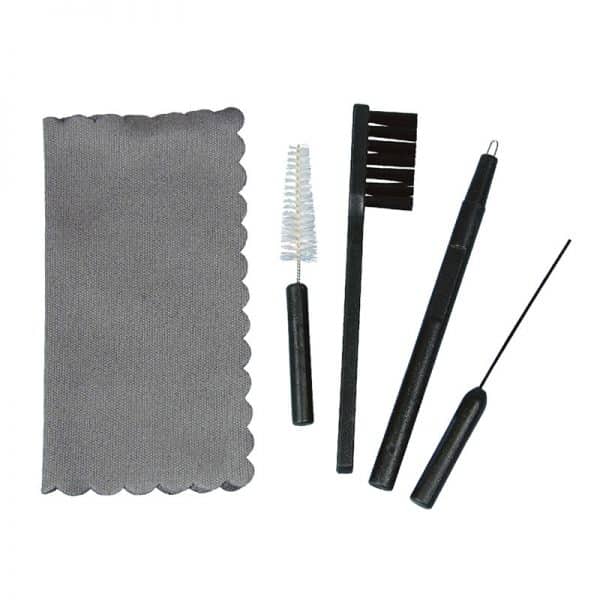
Start with precision tools tailored for gentle removal. Typical inclusions are:
- Soft-Bristle Brushes: Compact brushes with fine, gentle fibers ideal for sweeping away surface grime and wax from exteriors and vents without scratching.
- Wax Removal Sticks: Specialized probes designed to dislodge persistent buildup from crevices and ports safely.
- Tube Brushes or Wires: Slender, bendable cleaners (often called wax loops) perfect for flushing behind-the-ear (BTE) tubes, promoting unobstructed sound flow.
- Specialized Sprays: Formulated solutions that sanitize and dissolve residues while protecting sensitive electronics from harm.
- Pre-Moistened Wipes: Portable cloths infused with safe agents for quick spot-cleaning, defending against microbes and contaminants on the go.
2. Drying Accessories
Humidity poses a major threat to functionality. Incorporate these to combat it:
- Drying Containers: Compact kits with desiccant packs and sealed cases that wick away overnight moisture for thorough air-drying.
- Electronic Dehumidifiers: Advanced stations with fans or heaters for deep extraction, ideal for complete moisture elimination in humid settings.
- Portable Pouches: Travel-friendly sacs filled with absorbent gels, great for maintaining dryness during workouts or in steamy weather.
Optimal Techniques for Cleaning Different Hearing Aid Styles
Various models—like behind-the-ear (BTE), in-the-ear (ITE), and receiver-in-canal (RIC)—require customized approaches to sustain efficiency. Below are proven protocols for each, ensuring long-term reliability:
1) Cleaning BTE Hearing Aids
- Detach the Dome or Mold: Gently twist and pull off the earmold or dome from the main unit.
- Sanitize the Dome or Mold: Inspect for wax accumulation. Use a brush or pick to loosen debris softly. For reusable domes, swap if overly soiled. For custom molds, soak in lukewarm soapy solution briefly, scrub with a soft tool, rinse under cool water, and air-dry fully before reattaching.
- Wipe the Body: Employ a lint-free cloth to buff the casing dry, steering clear of liquids near circuits to avoid shorting.
- Flush the Tubing: Insert a tube cleaner from one end, advancing it smoothly to the other to eject blockages. Confirm dryness before reconnecting.
- Inspect Vents and Ports: Delicately sweep microphones and receivers with a mini brush to clear any obstructions.
- Dehumidify Overnight: Place in a drying unit or station to evaporate residual dampness completely.

2) Cleaning ITE Hearing Aids
- Surface Buffing: Glide a soft, dry microfiber cloth over the full exterior to lift visible residues.
- Port Maintenance: Lightly sweep microphone and speaker openings with a fine brush to remove potential sound barriers like wax flakes.
- Wax Guard Evaluation: Routinely check these filters; replace per guidelines if clogged to prevent signal interference.
- Targeted Wax Extraction: Employ a wax loop tool cautiously to address stubborn deposits in tight spaces.
- Moisture Control: In sweaty or humid locales, slot into a dehumidifier nightly for proactive drying.
3) Cleaning RIC Hearing Aids
- Body Polishing: Use a dry, gentle cloth to remove surface dirt from the housing.
- Receiver Brushing: Focus a small brush on the receiver’s apertures, targeting wax and particles in perforations.
- Dome or Mold Check: Examine the canal-fitting tip for buildup; brush or scoop away wax gently. Replace if irredeemable. For molds, follow BTE protocols: soak in mild soapy water, agitate debris, rinse, and dry meticulously.
- Full Drying Cycle: Tuck into a drying kit or electronic unit overnight to purge all traces of humidity from components.

Remember, diligent routines not only safeguard your hearing aids’ endurance but also optimize their role in your auditory world, letting you savor every nuance of life with confidence!
Hearing Aid Cleaning Kit: Frequently Asked Questions
1. Can I use household cleaners or water on my hearing aids?
No—avoid water, alcohol, or general cleaners, as they can damage electronics or cause short circuits. Stick to kit-specific sprays, wipes, and dry cloths designed for hearing aids to protect delicate parts while effectively tackling wax and debris.
2. How does moisture affect hearing aids, and how can I combat it?
Humidity from sweat, rain, or humid climates can lead to corrosion and malfunctions. Combat it by using drying containers with desiccants, electronic dehumidifiers for active extraction, or portable pouches during activities. Overnight drying routines are crucial for all models to restore dryness and reliability.
3. What should I do if my hearing aid still sounds muffled after cleaning?
Double-check for hidden blockages in ports or tubing, ensure components are fully dry, and verify wax guards aren’t overdue for replacement. If issues persist, contact your audiologist for professional inspection—early intervention prevents bigger problems.